
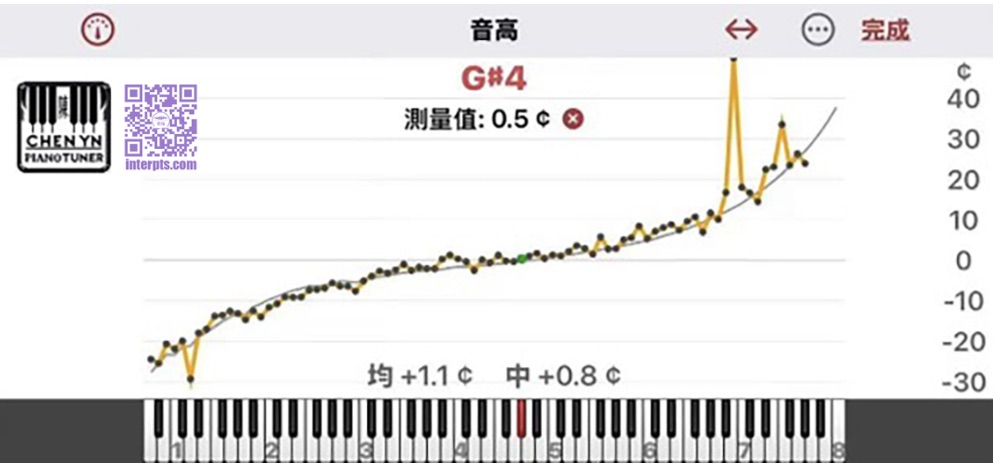
This second installment of the “Brooklyn Chronicles” explores the delicate balance between data precision and aesthetic choices. Servicing a prize-winning 1887 German piano, the author utilizes Pianoscope’s “Headless Tuning” and “Partial Locking” to navigate the challenges of centennial “False Beats.” The article delves into how craftsmen use physical data as a secondary guide to regain sensory sovereignty, ultimately achieving an artistic leap from engineering metrics to a refined, Chopin-esque tonal purity.
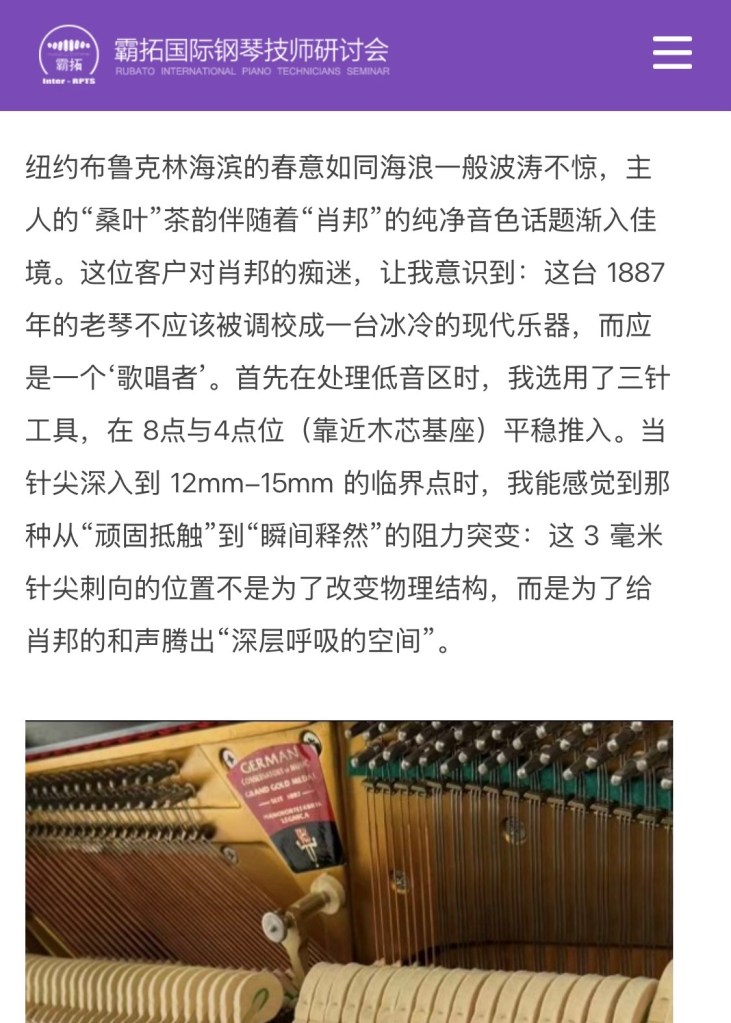
霸拓国际钢琴技师研讨会—琴匠笔记:德国汉堡 Pianoscope 软件的数据对焦—纽约布鲁克林音色修复实地报告2-2
参考文献:(Reference List)
- Pieper, Frank.Pianoscope: The Professional Piano Tuning App (Version 2.0). Hamburg, Germany: Pianoscope Software. (Focus on: Headless Tuning Mode and Partial-based Alignment).
- 中译:Pianoscope 调音软件:由德国汉堡 Frank Pieper 开发(核心技术:无头调音模式与基于泛音的对齐算法)。
- Askenfelt, Anders (Ed.).Five Lectures on the Acoustics of the Piano. Royal Swedish Academy of Music, 1990. (Theoretical basis for Inharmonicity and Overtone Series).
- 中译:钢琴声学五讲:瑞典皇家音乐学院出版(关于非谐性与泛音列的声学理论基础)。
- Abel Piano Hammer Co.Technical Manual on Cold-Pressed Wool Felt and Resilience. Frankenhardt, Germany. (Research on Fiber Elasticity and Tonal Response).
- 中译:德国 Abel 榔头公司:关于冷压羊毛毡与回弹力的技术手册。
- Reblitz, Arthur A.Piano Servicing, Tuning, and Rebuilding. Vestal Press, 1993. (On Historical Scale Design and False Beats Management).
- 中译:钢琴维护、调律与重建:关于历史挂弦设计与假拍处理的行业指南。


Leave a Reply