

Steinway Regulation and Touch
施坦威钢琴手感调整散记(一)
感觉每台施坦威(Steinway)都是独一无二的,换句话说就是没有两台琴是百分之百一模一样的。曾经有一位钢琴家就说问题是出在施坦威钢琴的调音和手感调整上,不同的钢琴技师对声音的理解并不一样,导致做出来的音色也会有差异……这句话讲的很中肯也很到位在此谈点个人的意见:
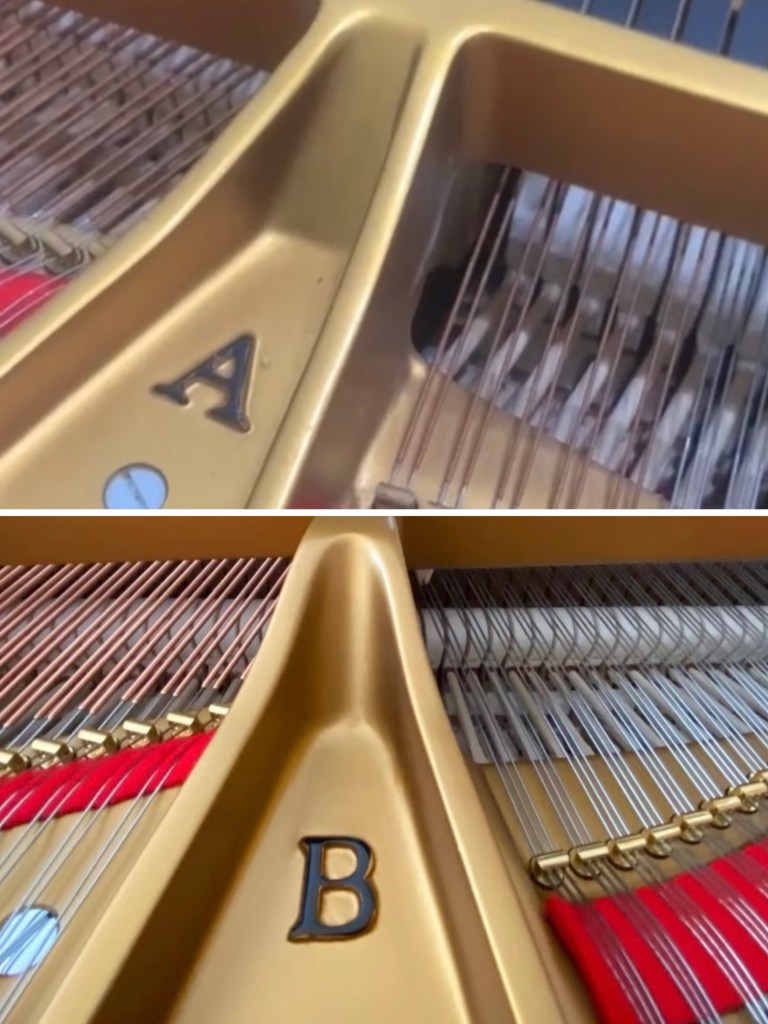
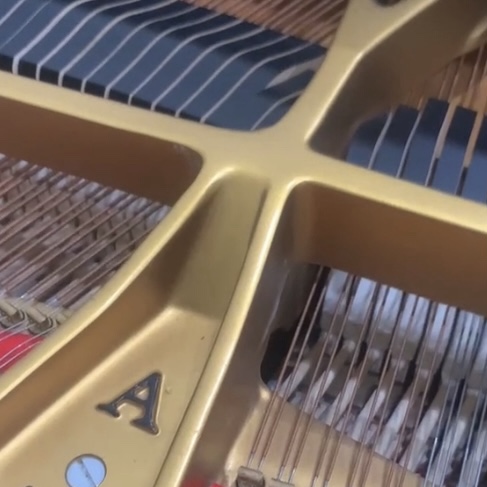
通过调音施坦威A-188、B-211,感觉斯坦威B是性价比最好的尺寸,被斯坦威官方称为最完美的型号。其音色统一、音量足够大,音色变化均匀、尺寸适中,很多专业老师和学生都会认为从专业演奏及练习的角度来说,斯坦威S和M由于尺寸限制,容易出现低音不够厚重,高低音区音色偏模糊的问题。而斯坦威L,尺寸加大了,低音区的音量得到提升,音质也更好。但是由于低音区钢琴外壳的限制,容易产生高低音区音色不统一的现象。比如,低音过于大声,高音音色偏脆。
施坦威(Steinway)B-211是最经典的型号,1884年设计定型之后再也没大改。我个人觉得B是施坦威中大型三角钢琴里性价比最高的,B和A-188用的是一样的榔头,键盘设计和击弦机几乎一样。由于设计的最优化,不论是高低音的平衡,还是更长的键盘带来的动态,都明显比A要好很多。 因为三角琴有一万两千多个零部件组成,决定声音的材料(木材)不可能每一块都完全一样,再加上琴的使用频率、使用强度、存放环境、保养状况、房间的音响效果等即便是同型号,每一台琴的音色和手感都是不同的。

最初我对施坦威(Steinway)的了解是通过感性的弹奏和练习,后来参加了施坦威的培训及得到了工厂的学习机会,接触了不同的技师和制造师;其中和首席技师交流惊讶的感觉到,出厂后的弹奏手感和制造的思维及思想完全是两个不一样的世界……近几十年耳闻目睹了施坦威钢琴年销量2000-3500台的市场现状,其中与诸多斯坦威钢琴技师的努力工作分不开的。为此有必要就网络与现实中许多有个性的语言比如“日本琴轻,欧洲琴重”、“雅马哈明亮,卡瓦依柔和”、“贝森朵夫帝王气质”、“Fazioli声音性感”……等就调整与音色的关系做点补充特别是施坦威钢琴的手感调整。
遍及全世界的(Steinway)的手感调整是具有非常准确严谨的技术调整要求的,其中调整平衡器“震奏杆”的高度可以消除飞摆与转向节之间的空动,同时帮助飞摆轻松返回其静止位置。步骤分为初始调节和最终调节:通过升高或降低平衡器调节螺丝来调整平衡器的高度,当飞摆通过转向节下方时;感觉有轻微的拖曳导致弦槌“眨眼”,施坦威工厂技师称这个工序为“滚动飞摆”。

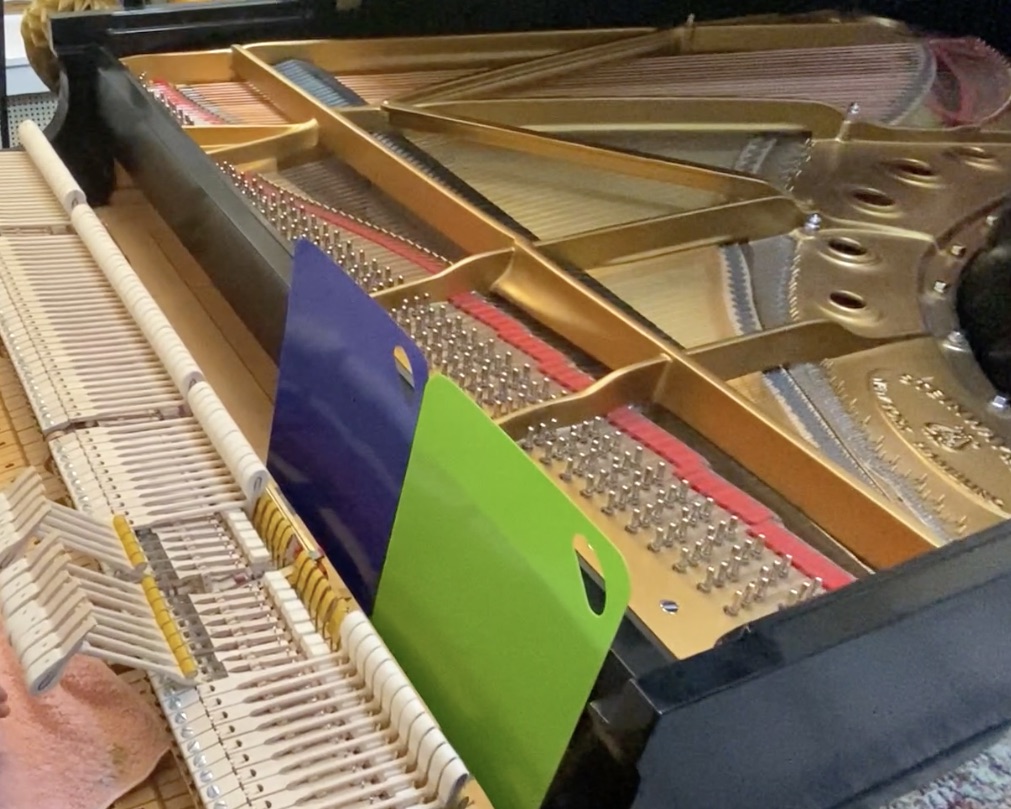
另一个施坦威(Steinway)技术指标就是调整击弦距离:击弦距离是弦槌从其静止位置行进到琴弦的量,一般是测量琴弦底表面到槌首顶部的距离。通过向上或向下旋转琴键绞盘螺丝“卡钉”来调节。严格的技术要求距离可能在合理范围内有细微的变化,但弹奏手感的差距存在必定需要调律师的经验赋予其调整的细微指数,有时甚至是徒劳的调整。过小的击弦距离将产生减弱的动力冲程;过深的击弦距离将需要过度的键深,导致过度的键行程。这种调整应该在弦列的每个音区进行,因为每个钢琴内的弦高从低音至高音不断地改变。国内许多高级技师曾使用键盖作为弦槌后面的背景,在视觉上勾勒出弦槌线。
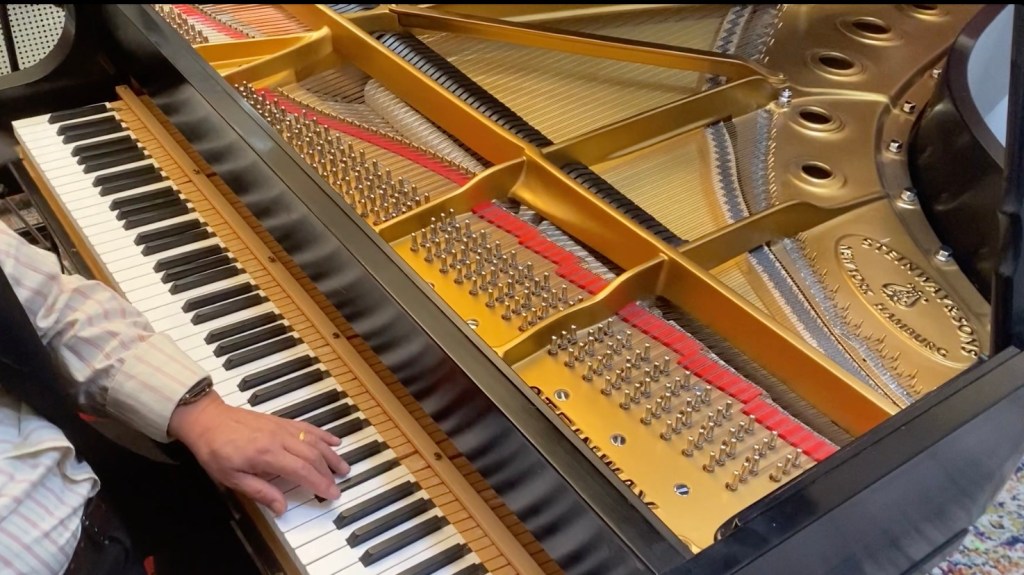
Steinway技术指标就调节脱进(擒纵)对手感的调整意义就更大了,其中脱进的调节对于实现轻重柔滑的弹奏至关重要。如果将脱进调节到离琴弦太远,则弦槌会过早逃逸。也就导致难以控制柔弱声弹奏出现,同时降低手感舒适度。为此调整的目的是确保弦槌接触琴弦时的绝对帖服和柔滑,其调整调节脱进的距离不小于1/32吋,不超过1/16吋。弹奏现场调整与演奏的技术要求,以及确保弦槌垂落“回跌”的关系是非常密切的、浑然一体的。特别是演奏不同作曲家的不同风格作品就更加需要调音师与演奏者的沟通了。当然综合考量施坦威钢琴的调整技术指标还有许多日后再一一叙述。
斯坦威钢琴调音调整陈师傅
2023-9月纽约
Steinway Piano Touch Adjustment Notes (Part 1)
It feels like every Steinway piano is unique, in other words, no two pianos are exactly the same. A pianist once said that the issue lies in the tuning and touch adjustment of Steinway pianos. Different piano technicians have different understandings of sound, which leads to variations in the resulting tone… This statement is very accurate and relevant. Here are some personal opinions:
After tuning the Steinway A-188 and B-211, it feels like the Steinway B offers the best value for its size, often referred to by Steinway as the most perfect model. Its tone is consistent and the volume is sufficient. The tone changes are even, and the size is moderate. Many professional teachers and students believe that from the perspective of professional performance and practice, the Steinway S and M, due to their size limitations, tend to have insufficient richness in the low range and a slightly blurred tone in the high and low ranges. The Steinway L, with its larger size, has increased volume in the low range and better sound quality. However, due to the limitations of the piano’s casing in the low range, there may be inconsistencies in the tone between the high and low ranges. For example, the low range may be too loud while the high range sounds brittle.
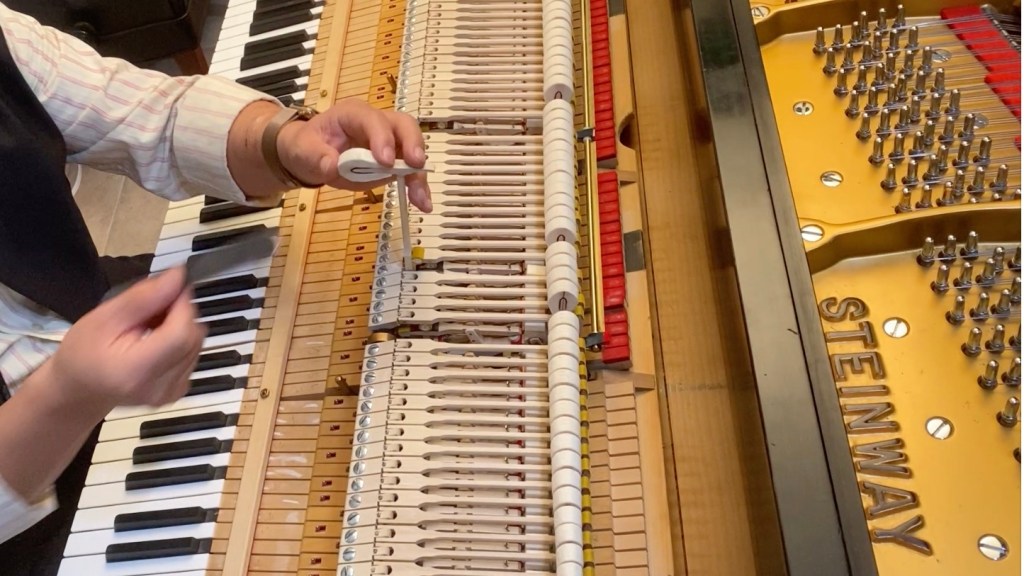
The Steinway B-211 is the most classic model and has not undergone major changes since its design was finalized in 1884. Personally, I believe that the B is the most cost-effective among the large triangle pianos in the Steinway lineup. The B and A-188 use the same hammers, and the keyboard design and string striking mechanism are almost identical. Due to its optimized design, both the balance between the high and low ranges and the dynamics brought by the longer keyboard are significantly better than the A. Since a grand piano is composed of over twelve thousand components, and the material (wood) that determines the sound cannot be exactly the same for every piece, coupled with factors such as frequency of use, intensity of use, storage environment, maintenance condition, and room acoustics, even for the same model, the tone and touch of each piano are different.
My initial understanding of Steinway came through playing and practicing on their pianos. Later, I had the opportunity to participate in Steinway’s training program and study at their factory, where I interacted with different technicians and craftsmen. One of the surprising things I noticed during my interactions, especially with the chief technician, was that the playing experience and the mindset of manufacturing were completely different worlds.
Over the past few decades, I have witnessed the market situation of Steinway pianos, with annual sales ranging from 2000 to 3500 units. The efforts of many Steinway piano technicians have played a crucial role in this. Therefore, it is necessary to make some supplementary explanations regarding the relationship between various personalized descriptions in both online and real-life contexts, such as “Japanese pianos are light, European pianos are heavy,” “Yamaha has a bright tone, Kawai has a soft tone,” “Bösendorfer has an imperial temperament,” “Fazioli has a sexy sound,” etc. Especially, adjustments to the touch of Steinway pianos need to be considered.
The touch adjustment of Steinway pianos, spread across the world, requires very precise and rigorous technical adjustments. One of these adjustments involves the height adjustment of the damper lever, which helps eliminate play and backlash between the damper and the flange, allowing the damper to return easily to its resting position. The process consists of initial adjustment and final adjustment: the height of the damper lever is adjusted by raising or lowering the balance rail regulating screws, so that when the damper passes beneath the flange, there is a slight drag causing the hammer to “blink.” Steinway factory technicians refer to this process as “rolling the damper.”

Another significant technical indicator for Steinway is the adjustment of the strike distance. The strike distance is the distance traveled by the hammer from its resting position to the string, usually measured from the bottom surface of the string to the top of the hammer head. This adjustment is done by rotating the key regulating screw “jack screw” upward or downward. Although there may be slight variations within a reasonable range due to strict technical requirements, the difference in playing experience necessitates the skill and experience of a piano technician to make subtle adjustments, sometimes even in vain. A strike distance that is too small will result in a diminished dynamic range, while a strike distance that is too deep will require excessive key depth and travel. This adjustment should be done for each section of strings, as the string height within each piano changes from the bass to the treble. Many advanced technicians in China have used the keybed as a background behind the hammer to visually outline the string line.
The adjustment of escapement (let-off) is even more significant in terms of touch adjustment for Steinway pianos, as it is crucial for achieving a light, responsive touch. If the escapement is adjusted too far from the strings, the hammer will escape prematurely, making it difficult to control soft and delicate playing, while also reducing the comfort of touch. Therefore, the purpose of adjustment is to ensure absolute compliance and smoothness when the hammer contacts the strings. The adjustment of escapement should not be less than 1/32 inch or exceed 1/16 inch. The relationship between the adjustment of escapement and the action of playing is very close and integrated. Especially when playing works of different styles by different composers, communication between the piano technician and the performer becomes even more crucial. Of course, there are many other technical indicators for Steinway pianos that will be discussed in detail in the future. (2023)
Translated by AI.



Leave a Reply